About the book
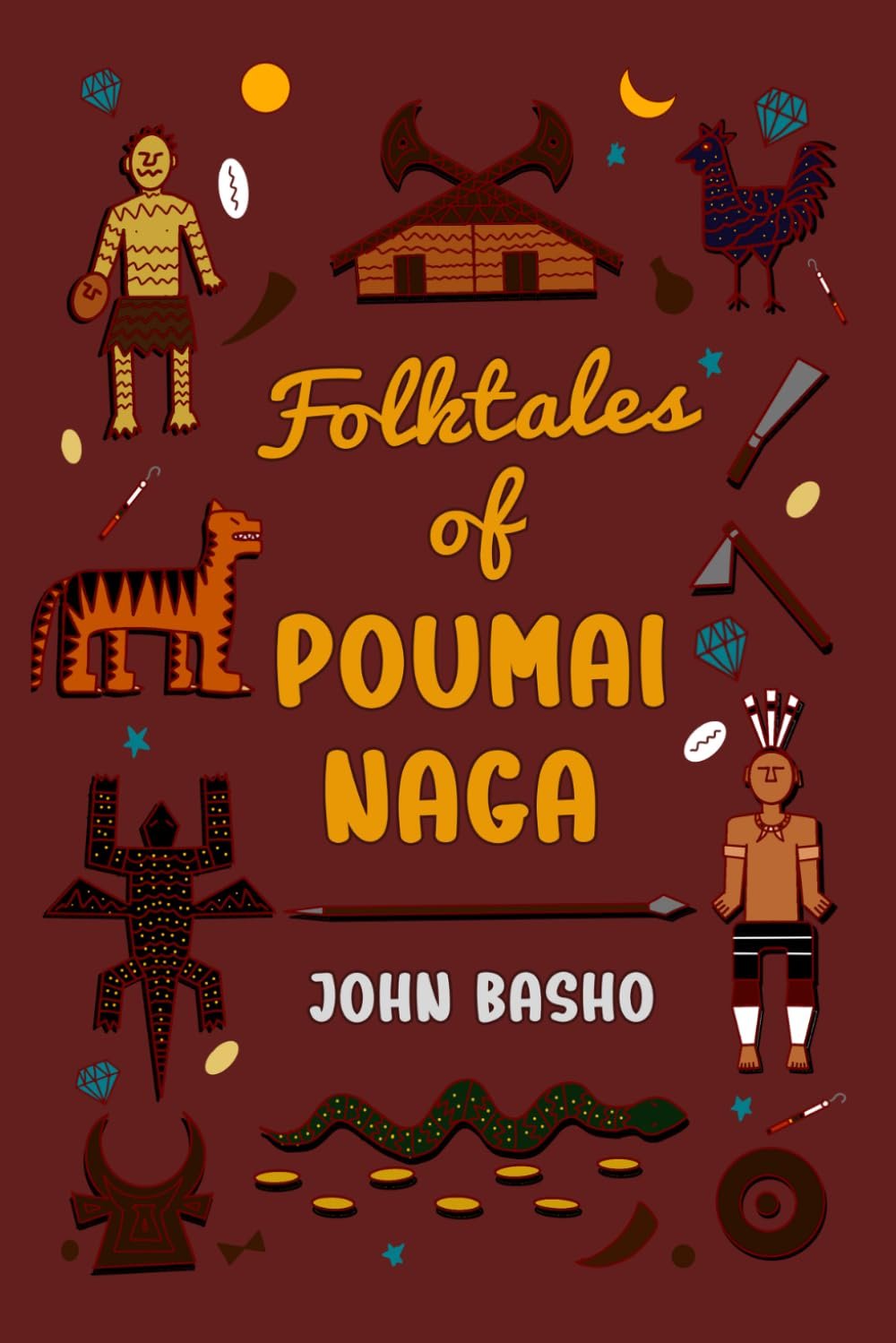
Folktales of Poumai Naga by John Basho is a remarkable debut collection of fifty illustrated folktales that transport readers to a mystical time when rivers sing, animals speak, spirits roam, and gods walk among mortals in the land of Poumai Naga, Manipur. This captivating anthology brings to life enchanting stories passed down through generations — from the Rooster who pacified the angry Sun, to…Show more
Folktales of Poumai Naga by John Basho is a remarkable debut collection of fifty illustrated folktales that transport readers to a mystical time when rivers sing, animals speak, spirits roam, and gods walk among mortals in the land of Poumai Naga, Manipur. This captivating anthology brings to life enchanting stories passed down through generations — from the Rooster who pacified the angry Sun, to Reinai who wept inconsolably over her lover's grave, to the magical cake of dry cow dung that turned Naayongi into a rich man. Discover how the peacock got its beautiful tail, how a tiger was outwitted by a frog, and how the brave warrior Proupuozei slew the fiercest wild beasts and monsters to save humankind. Rich with cultural heritage and vivid illustrations, this collection is a treasure trove of folklore from North-East India. Whether you are a lover of mythology, regional literature, or simply a good story, this illustrated volume is a must-read for readers of all ages. Cover illustration and design by Phrolee D Obed.
Book details
What readers here said
The standout quality of this collection is its sheer imaginative scale and the magical realism of its topography. Basho introduces us to an enchanted world where animals are cunning, spirits roam open fields, and celestial bodies have human temperaments. You will encounter whimsical cosmic struggles, like a rooster who convinces an angry Sun to return to the sky, alongside playful origin myths that explain how an ailing grandmother recovered her health by tasting a chili pepper, inadvertently introducing the spicy staple to the human diet. There are also deeply poignant human tales, such as the tragic story of Reinai, who mourns over her lover’s grave so deeply that she stays there until the grass begins to sprout from the soil.Beyond just entertainment, this book serves as a vital bridge for cultural preservation. Historically, the Poumai Naga tribe has relied entirely on oral storytelling rather than written text. Basho does an incredible job of not just dryly recording these myths, but preserving their emotional texture, traditional rhythm, and communal wisdom. The reading experience is heightened significantly by the vivid cover design and internal illustrations by Phrolee D Obed, which provide a beautiful visual anchor to the traditional attire, landscapes, and lore of North-East India.Ultimately, this collection is a must-read if you enjoy indigenous mythologies or the seamless blending of folklore with the natural world. Despite being deeply rooted in the specific heritage of Manipur, the writing is clear, vibrant, and universally charming for readers of all backgrounds. It offers a rare, firsthand exploration of a vibrant community whose written stories are far too rare in mainstream literature, making it a highly rewarding addition to any bookshelf.